Key Takeaway:
Apple and Google are finalizing a landmark $1 billion-per-year partnership that will bring Google’s 1.2 trillion-parameter Gemini AI model to power Siri in iOS 26.4, marking one of the most significant alliances in modern tech. The collaboration elevates Siri’s intelligence while Apple and Google navigate shared competition, privacy challenges, and regulatory shifts. Apple positions the move as a temporary but necessary step while it accelerates its in-house AI model development expected by 2026.
Apple and Google Deal – Key Points
$1 Billion Yearly Deal Between Apple and Google
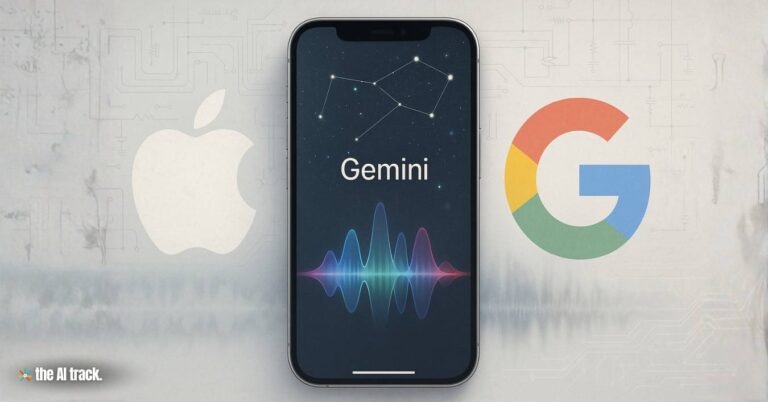
Apple and Google have agreed on a $1 billion annual licensing deal that gives Apple access to Gemini, Google’s 1.2 trillion-parameter AI model, for Siri’s system-wide upgrade. The model is roughly eight times larger than Apple’s existing 150 billion-parameter cloud model, marking an unprecedented leap in scale. Initially reported by Bloomberg, this partnership between Apple and Google underscores a pragmatic shift toward collaboration to remain competitive against OpenAI, Anthropic, and Perplexity in the accelerating AI landscape.
Purpose: Temporary Fix Until Apple’s Own AI Matures
Internally named Project Glenwood, this partnership serves as a transitional solution until Apple’s proprietary AI reaches Gemini-level performance. Siri’s rebuilt system — codenamed Linwood — is scheduled to launch with iOS 26.4 in spring 2026, which Apple positions as its biggest AI leap since Siri’s original debut in 2011. Two senior executives are driving the initiative: Mike Rockwell, known for leading the Vision Pro effort, and Craig Federighi, Apple’s software chief. Apple’s stated long-term goal is to replace Gemini entirely. The company is already developing an internal ~1 trillion-parameter cloud model and is targeting initial readiness in 2026, with the expectation that its own model will eventually displace Gemini once performance and reliability are acceptable.
New Siri Architecture: Three Core Components
The next-generation Siri is being rebuilt around a three-part architecture:
Query planner – interprets user intent and breaks complex, multi-step requests into actionable steps.
Knowledge search system – locates and retrieves relevant information, including context from the user’s device or available services.
Summarizer – returns concise, context-aware answers.
Under this model, Google’s Gemini handles the planner and summarizer roles (high-level reasoning, task sequencing, and language synthesis), while Apple’s own models remain responsible for on-device personal data access and execution. This preserves Apple’s core promise: Siri can act on highly personal instructions (“find the book recommendation from Mom,” “summarize last night’s meeting notes,” etc.) without exposing private data to external systems.
Massive Upgrade in Processing and Contextual Ability
The shift from a ~150B-parameter model to a 1.2T-parameter model is an eightfold jump in scale. This enables significantly stronger contextual awareness, instruction-following, and multi-step planning. Under the Linwood architecture, Siri is designed not just to answer questions, but to carry out tasks across apps in a structured way — for example, retrieving information from messages, drafting an email, and scheduling a follow-up, instead of handing back a generic web answer. Apple expects this capability to begin rolling out in iOS 26.4 in spring 2026, alongside deeper Siri integration into daily device workflows. Internally, this is described as Apple’s first serious attempt to make Siri competitive again after years of stagnation.
Private Cloud Compute: Data Separation from Google
The new Siri runs exclusively on Apple’s Private Cloud Compute (PCC), ensuring user data never leaves Apple’s control. PCC leverages custom Apple silicon (M2 Ultra and “ComputeModule14,1”) with stateless computation and ephemeral encryption keys that self-delete upon reboot. While Apple and Google collaborate on model implementation, all inference takes place within Apple’s servers, not Google’s. This setup balances privacy with performance but increases Apple’s infrastructure burden due to Gemini’s massive size and stateless processing requirements.
Stock Market Reaction
Following news of the partnership, Apple’s stock rose 0.8% to $271.70, while Alphabet (Google’s parent) gained 3.2% to $286.42. Investors viewed the Apple and Google deal as strategically beneficial to both: Apple gains access to world-class AI capabilities, while Google secures a high-profile, recurring enterprise revenue stream that reinforces Gemini’s industry dominance.
Quiet Partnership, No Branding Visibility
The Apple and Google deal remains intentionally discreet in consumer-facing branding. There will be no “Powered by Google” labels in Siri’s interface. Apple maintains the narrative of an entirely native experience, even as Google’s engine drives key reasoning functions behind the scenes — a sharp contrast to the companies’ visible Safari search partnership.
China-Specific Siri Without Google
Since Google services are banned in China, Apple will ship a localized Siri powered by its own models combined with Alibaba’s filtering layer. Discussions with Baidu remain open for future AI cooperation. This dual strategy ensures Siri’s availability in China without dependency on Google, demonstrating Apple’s capacity to navigate regulatory complexities while maintaining global rollout plans.
AI Talent and Long-Term Strategy
Apple’s reliance on Google reveals both strategic realism and internal challenge. Despite losing several senior researchers, Apple is pursuing its 1 trillion-parameter in-house model, expected to debut in late 2026. The company views Gemini as a stopgap, a means to stay relevant while rebuilding its internal AI leadership and infrastructure.
Gemini’s Market Leadership Reinforced by Apple and Google Alliance
The Apple and Google partnership strengthens Gemini’s leadership status. The model’s 2.5 Pro version currently tops global AI benchmarks in reasoning and task planning. Other major clients like Snap and Google Cloud’s Vertex AI already use Gemini, but Apple’s adoption marks its first integration into a global consumer ecosystem — a defining moment for AI platform strategy.
Apple’s 2026 Ecosystem Pivot: Beyond Siri
The Gemini integration fits into a broader 2026 Apple roadmap that links AI capability, software policy, and hardware evolution. Key elements include:
- A redesigned web-based App Store that opens direct browser access to individual app pages. This move addresses antitrust pressure while widening discovery beyond iPhone-only channels. Developers gain improved promotion tools, including support for up to 10 active codes per purchase and up to 1 million promo codes per app per quarter, and richer asset hosting, with Apple-Hosted Background Assets up to 200 GB that can update independently of full app releases.
- Expectations of 15+ new AI-enabled products in 2026, including next-generation smart home devices and possibly foldable hardware.
- An OS-level shift toward assistants that can act across apps, not just answer questions, positioning Siri less as a voice search tool and more as an automation layer for the entire Apple ecosystem.
Developer Opportunity: App Intents Integration
Siri’s new planner and summarizer modules open a growth channel for app developers through App Intents, Apple’s system for exposing app functions to Siri and Shortcuts. Early testing with enterprise partners in commerce, productivity, and non-banking finance suggests significant upside for third-party tools integrated before Siri’s spring 2026 relaunch. Developers who implement App Intents early will be favored when Siri autonomously routes user tasks to compatible apps.
Strategic Pattern: Pragmatism Over Pride
The iOS interface continues to evolve alongside Siri’s backend transformation. The Liquid Glass aesthetic gains a tinted opacity option, and features such as AutoMix over AirPlay, gesture-based music switching, and security improvements through Background Security Enhancements improve daily usability — reinforcing Apple’s shift from style-centric minimalism toward functional design harmony.
Why This Matters
The Apple and Google partnership symbolizes a pragmatic turn in Silicon Valley’s competitive narrative. It demonstrates how rivals can temporarily align to accelerate innovation in artificial intelligence while protecting user privacy and platform integrity. For consumers, it promises a smarter, context-aware Siri capable of autonomous task handling. For the tech industry, it sets a precedent for Apple and Google, the two largest ecosystem gatekeepers, to cooperate under pressure while retaining distinct brand philosophies. This model of “competitive collaboration” may shape the next era of AI deployment, infrastructure design, and global data governance.
This article was drafted with the assistance of generative AI. All facts and details were reviewed and confirmed by an editor prior to publication.
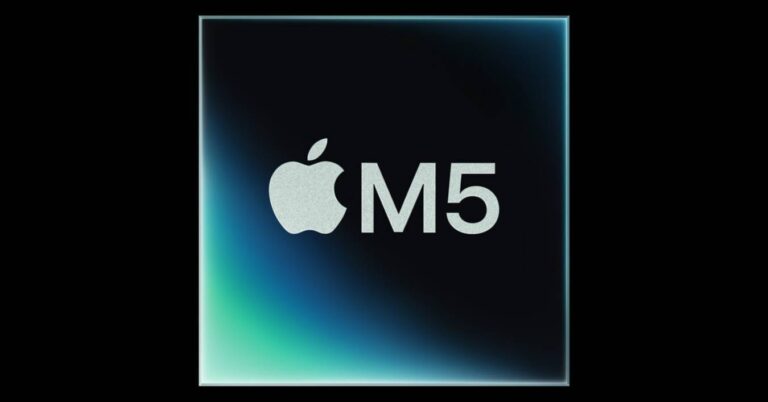
Apple unveils the M5 chip with 4x AI GPU gains, 45% graphics uplift, 16-core Neural Engine, and 153GB/s memory bandwidth in MacBook Pro, iPad Pro, and Vision Pro.

Apple upgrades to GPT-5 in iOS 26, adding advanced Siri, video perception, live translation, and expanded AI tools with privacy protections.
Read a comprehensive monthly roundup of the latest AI news!