Key Takeaway
OpenAI launched a free shopping research tool inside ChatGPT that acts as a Personal Shopping Assistant, helping users find products, compare deals, and generate personalized buyer guides. Powered by a specialized GPT-5 mini model post-trained for shopping tasks, it delivers higher product accuracy than other ChatGPT models and supports OpenAI’s broader e-commerce strategy, including Instant Checkout.
OpenAI Launches “Personal Shopping Assistant” – Key Points
New interactive shopping research feature rolls out across mobile and web (late 2025) with holiday boost
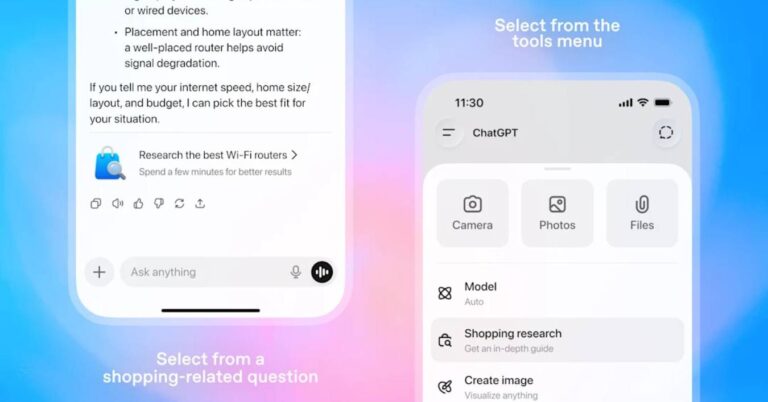
Shopping research is rolling out on mobile and web for all logged-in ChatGPT users across Free, Go, Plus, and Pro plans. To support the 2025 holiday season, OpenAI is providing nearly unlimited usage. Users can activate this Personal Shopping Assistant by asking a shopping question (such as “Find the quietest cordless stick vacuum for a small apartment”) or by selecting “Shopping research” from the tools menu, turning pre-purchase browsing into a guided conversation ahead of events like Black Friday.
Powered by GPT-5 mini, post-trained for shopping with higher product accuracy
Shopping research runs on a version of GPT-5 mini trained with reinforcement learning specifically for shopping. It reads trusted product pages, cites reliable sources, avoids low-quality or spammy sites, and synthesizes information across retailers. In a new internal evaluation using difficult, constraint-heavy product discovery queries, the shopping research model achieved the highest product accuracy—defined as the share of recommended products matching user requirements (price, color, material, specs)—outperforming GPT-5-Thinking, GPT-5-Thinking-mini, and ChatGPT Search.
Built for deep, constrained decisions across detail-heavy categories
The tool targets users who must balance budget, form factor, specs, and style rather than just check a single feature. It performs well in detail-rich categories like electronics, beauty, home and garden, kitchen and appliances, and sports and outdoor. Typical tasks include finding a quiet cordless vacuum for small apartments, an e-bike for daily commuting, or a gaming laptop under a fixed budget with a minimum screen size. For quick checks such as one price or feature, a normal ChatGPT answer remains faster, while shopping research takes a few minutes to deliver a fuller buyer guide.
Designed for end-to-end shopping support: discovery, comparisons, dupes, deals, and gifting
Acting as a flexible Personal Shopping Assistant, the tool can surface products that match specific criteria, identify lookalikes, compare items like strollers or laptops, highlight trade-offs, and surface discounts. It also supports gift-oriented prompts, creating themed suggestions for relatives, coworkers, or friends moving into new homes. The final buyer guide includes product lists, summaries, and retailer links.
Interactive feedback loop mimics a Tinder-style experience and refines results in real time
Shopping research uses an interactive interface rather than a static response. As it pulls live prices, availability, reviews, and images, ChatGPT presents product cards that users can accept or reject with a single tap. Feedback such as “More like this” or “Not interested” immediately reshapes the recommendations. With memory enabled, prior preferences—such as gaming or eco-friendly priorities—automatically influence future buyer guides.
Supports image-based search, lookalikes, and complex multi-factor prompts
Users can browse via text or images. By uploading a photo of a dress, sneakers, or TV-inspired outfit, they can request similar items with different price points or attributes. The system can also handle highly detailed prompts including age, location, hobbies, pets, and lifestyle goals, making it suitable for both self-shopping and complex gift planning.
Integrated with ChatGPT Pulse for proactive, context-aware buyer guides
The ChatGPT Personal Shopping Assistant is available in ChatGPT Pulse for Pro users. Pulse can proactively suggest buyer guides based on past chats, such as surfacing e-bike accessories after earlier discussions about commuting. These context-aware cards aim to deliver recommendations at the right moment without requiring users to initiate a new search.
Part of a broader e-commerce push alongside Instant Checkout and AI shopping agents
Shopping research expands OpenAI’s growing e-commerce stack. In September 2025, OpenAI introduced Instant Checkout, enabling purchases directly from eligible merchants inside ChatGPT. While today’s version routes users to retailer sites, future versions will enable in-app purchases. Alongside agent-style tools like OpenAI Atlas, this functionality positions ChatGPT as a Personal Shopping Assistant capable of supporting product discovery and, soon, transactions.
Built-in safety, transparency, and content integrity measures
OpenAI emphasizes that shopping research is merchant-agnostic and transparent. User chats are not shared with retailers. Results are based on publicly available retail sites that the model reads directly, citing sources while avoiding low-quality or spammy domains. Merchants must allow OpenAI’s crawlers via robots.txt and allowlisting to appear in results, preserving quality and trust.
Competitive landscape shifts as Amazon blocks OpenAI
After ChatGPT’s Personal Shopping Assistant launched, Amazon updated its robots.txt file to block ChatGPT’s shopping agents from accessing Amazon product pages, prices, specs, and reviews. With Amazon’s catalog excluded, retailers like Walmart, Target, Currys, and independent merchants may gain visibility if they allow OpenAI’s crawlers. Executives argue that brands that ignore AI-ready site design risk disappearing from future AI shopping surfaces.
Limitations and need for verification
Although the tool outperforms other OpenAI models in internal accuracy tests, mistakes can still occur, especially on live pricing and stock. Users should verify details on merchant sites before purchasing. The system is framed as a sophisticated Personal Shopping Assistant, not a final source of truth.
Future roadmap: deeper personalization and Instant Checkout integration
OpenAI plans tighter integration with Instant Checkout so users can complete purchases directly inside ChatGPT where supported. The roadmap includes deeper modeling of long-term preferences, broader category coverage, richer visual comparison tools, and more granular filters.
Real-world tests show strong utility, but not a full replacement for human intuition
Early journalist tests report that the tool gives generally accurate suggestions for tasks like matching TV-inspired outfits, choosing dog treats, and building complex multi-attribute gift prompts. Some suggestions lean literal, but many highlight thoughtful finds such as local bookstore gift cards and niche accessories. For shoppers who enjoy browsing, the tool accelerates discovery without replacing the fun of the hunt.
Why This Matters
Shopping research transforms ChatGPT into a powerful Personal Shopping Assistant capable of guiding complex purchasing decisions. By blending reinforcement-trained GPT-5 mini models, real-time feedback, and retailer-agnostic sourcing, OpenAI is building an AI shopping layer that sits above traditional search engines and marketplaces. It reduces the time needed to evaluate specs, compare models, and identify deals while preserving the user’s ability to verify final details.
Amazon’s move to block OpenAI’s crawlers underscores how AI shopping tools are becoming a strategic battleground for customer attention. Retailers that make their sites AI-friendly may gain visibility, while those that remain closed risk becoming invisible in AI-mediated discovery. As OpenAI deepens integrations with Instant Checkout and Pulse, ChatGPT is positioned to become a central hub for personalized, end-to-end shopping journeys.
This article was drafted with the assistance of generative AI. All facts and details were reviewed and confirmed by an editor prior to publication.
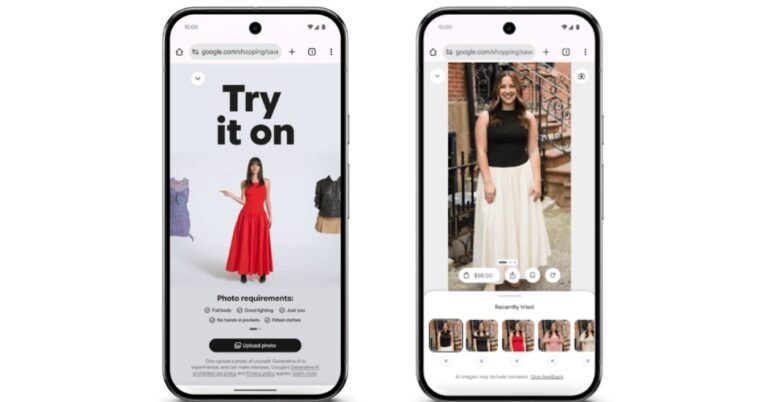
Google expands AI shopping with photo-based virtual try-on, Gemini-powered search, and auto-checkout via “Buy for Me.”

Amazon expects Rufus, its AI shopping assistant, to add $700M in 2025 profits. Global expansion, AI upgrades, and ad revenue drive the forecast.
Read a comprehensive monthly roundup of the latest AI news!