Key Takeaway
OpenAI has started rolling out ads in ChatGPT for logged-in U.S. users on the Free and Go tiers, introducing a new revenue model while insisting ads will not influence answers and that user conversations remain private.
OpenAI Introduces Ads in ChatGPT – Key Points
Limited U.S. Rollout on Free and Go Plans (2026 Test Phase)
OpenAI confirmed that it is testing ads in ChatGPT for logged-in adult users in the United States. The Free tier and the newer Go plan are included; Plus, Pro, Business, Enterprise, and Education plans remain ad-free. The rollout is limited, meaning some users may not see ads immediately. OpenAI calls it a learning-focused test before broader expansion.
First Major Monetization Shift Since 2022 Launch
Since launching in November 2022 without traditional advertising, ChatGPT has avoided embedded commercial content. Introducing ads marks a major strategic shift after years of rapid growth and rising infrastructure costs. Earlier experiments with app suggestions that resembled ads triggered backlash, increasing scrutiny around commercial influence in AI responses.
Why OpenAI Is Introducing ads in ChatGPT
OpenAI says “hundreds of millions” use ChatGPT for work, learning, and daily tasks. Supporting this scale requires significant computing power and capital. Ads in ChatGPT are presented as a way to fund free access while keeping paid tiers ad-free. The Go plan, introduced in mid-January, costs $8 per month in the U.S. (about €6.7 in Europe). Free users can opt out of ads but will receive fewer daily messages.
Ads Are Separate From Answers
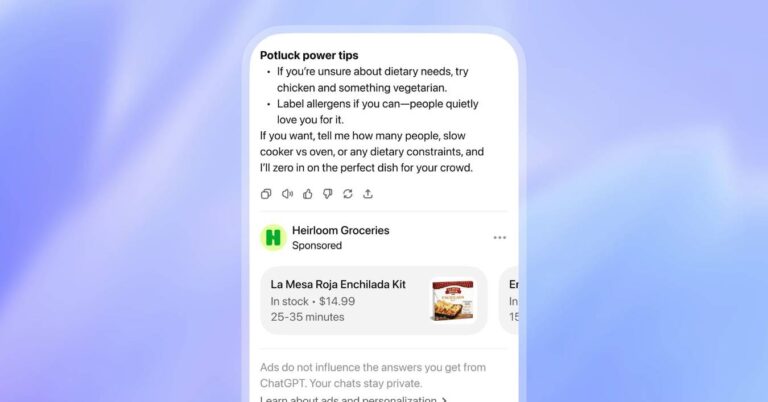
OpenAI states ads will not affect how ChatGPT answers questions. Sponsored content appears outside the main response and is clearly labeled. Public examples show banner-style ads, not ads inserted directly into answers. The company emphasizes strict separation between organic responses and paid placements.
How Ad Targeting Works
Ads are matched using:
Current conversation topic
Past chats
Previous ad interactions
For example, someone researching recipes may see grocery or meal kit ads. Users can disable personalization and prevent past chats from being used for ad targeting.
Privacy Protections and Data Controls
Advertisers do not see chat content, personal details, or memory data. They receive only aggregated metrics such as views and clicks. Users can review ad history, clear it at any time, delete ads data, dismiss ads, and manage personalization settings directly.
Age and Sensitive Topic Restrictions
Ads will not appear for users under 18. They are also blocked near sensitive topics such as health, mental health, and politics. OpenAI says these safeguards are central to maintaining trust.
Public Backlash and Rival Response
The rollout sparked criticism. Anthropic used Super Bowl LX ads to promote its chatbot Claude with the tagline: “Ads are coming to AI. But not to Claude.” The campaign portrayed ads as disruptive inside chatbots. OpenAI CEO Sam Altman responded publicly, calling the campaign “dishonest” and describing Anthropic as “authoritarian,” turning advertising into a competitive flashpoint in the AI race.
What Happens Next
OpenAI describes this as a test phase. The company will monitor performance and feedback before expanding. Future plans may include additional ad formats and buying models, while paid plans remain ad-free.
Why This Matters
The arrival of ads in ChatGPT signals a major shift toward a hybrid model: free access supported by advertising, premium plans without ads.
This move:
- Creates a new form of conversational advertising
- Redefines competition between ad-supported and ad-free AI platforms
- Raises questions about privacy, neutrality, and trust
- Highlights the growing cost of running large-scale AI systems
The U.S. test will determine whether users accept ads in AI tools they rely on for work, research, and personal decisions.
This article was drafted with the assistance of generative AI. All facts and details were reviewed and confirmed by an editor prior to publication.
OpenAI debuts GPT-5.3-Codex and Frontier, a centralized agent platform. Features mid-turn steering, 25% speed boost, and a $10M cyber defense fund.
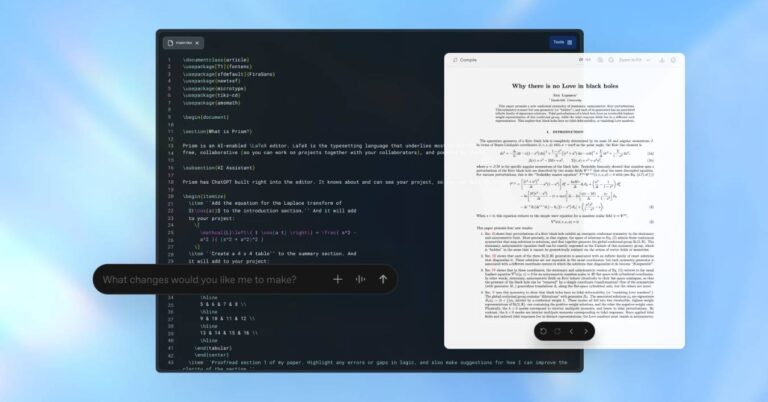
OpenAI launched Prism in January 2026, a free GPT-5.2-powered scientific workspace with unlimited collaborators and LaTeX-native workflows
Sam Altman says OpenAI competition is centered on Apple, not Google, as OpenAI pivots to AI devices and refocuses ChatGPT in 2025.
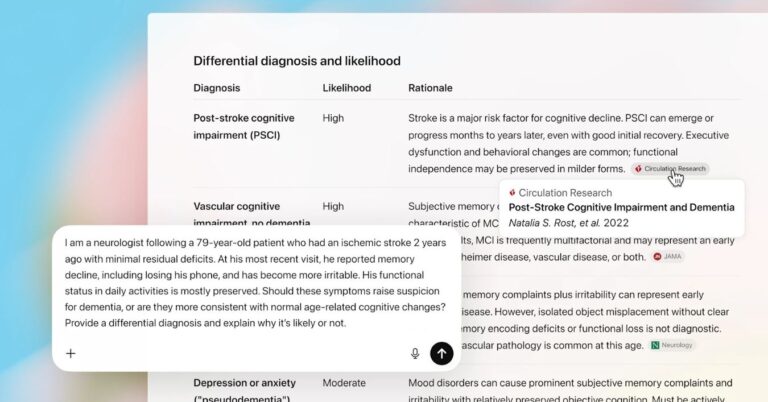
OpenAI launched ChatGPT Health on Jan 7, 2026, enabling U.S. users to connect medical records and wellness apps in a dedicated health workspace.
Read a comprehensive monthly roundup of the latest AI news!