Key Takeaway
Getty Images has signed a multi-year display agreement with OpenAI to bring licensed visual content into ChatGPT search and discovery experiences. The deal gives ChatGPT a path to richer visual answers while reinforcing licensing as a central issue in AI search.
Getty Images and OpenAI Partner – Key Points
The Story
Getty Images announced a display partnership with OpenAI on June 21, 2026. Under the agreement, Getty Images’ licensed content libraries will appear inside OpenAI search and discovery experiences within ChatGPT.
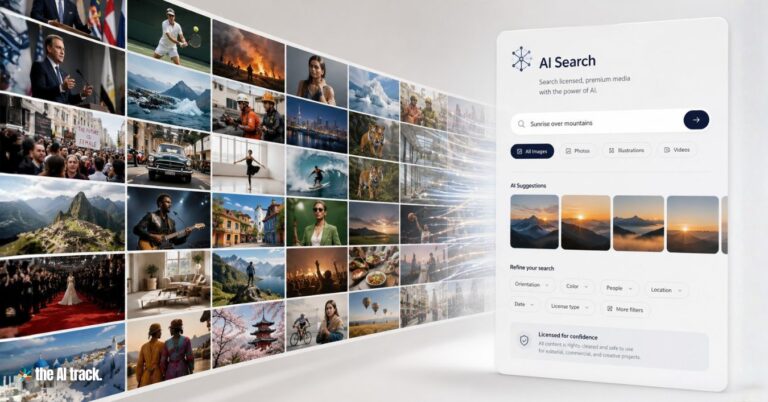
The agreement focuses on display. Getty Images content can appear as part of ChatGPT’s visual responses, rather than only being referenced through text. Getty CEO Craig Peters said high-quality, licensed visual content makes AI-powered search and discovery more useful and trustworthy.
For users, the practical effect could be clearer visual context when ChatGPT answers questions that benefit from images, such as news, sport, entertainment, history, places, people, and cultural references.
The Facts
- Companies involved: Getty Images and OpenAI.
- Announcement date: June 21, 2026.
- Agreement type: Multi-year display partnership.
- Product surface: ChatGPT search and discovery experiences.
- Purpose: Richer visual responses inside ChatGPT.
- Prior disclosure: In an SEC filing, Getty said it had previously referenced the unnamed deal during its Q3 2025 earnings call.
- Financial terms: Not publicly disclosed.
- Training rights: Getty and OpenAI have not publicly said whether the deal includes AI training rights. Getty’s earlier Perplexity agreement did not allow training use.
- Market reaction: Getty Images shares jumped sharply after the announcement, with a roughly 200% premarket surge after the stock had fallen about 55% earlier in 2026.
- Business context: Getty Images is awaiting completion of its planned $3.7 billion merger with Shutterstock.
- Regulatory status: The U.S. Department of Justice cleared the Getty–Shutterstock merger in February 2026. The U.K. Competition and Markets Authority conditionally cleared it in May 2026 if Shutterstock sells its editorial arm.
- AI legal history: Getty Images banned AI-generated art from its platform in September 2022 and sued Stability AI in 2023 over alleged unauthorized use of its images. In 2025, several major U.K. claims were dismissed or narrowed, while the dispute kept attention on copyright and AI training.
- Getty’s own AI tools: Getty later launched its own generative AI image tool, trained on its licensed library and powered by NVIDIA’s Edify model.
What Is New
The agreement gives ChatGPT access to licensed visual content for search and discovery experiences. This matters because AI search is moving beyond text-only answers.
Instead of relying only on generated images, web thumbnails, or text descriptions, ChatGPT can surface professional visual material from a rights-managed provider. That can improve context when users need to understand what something looks like, compare visual references, or identify a person, event, product, or location.
The deal also adds another example of AI companies reaching licensing agreements with media and content owners rather than relying only on open web content.
Why Display Rights Matter
Display rights and training rights are different.
A display agreement allows content to be shown to users inside a product experience. A training agreement would allow content to be used to train or improve AI models. That distinction matters for photographers, agencies, publishers, creators, and AI platforms.
For Getty Images, display licensing creates a way to place its content inside AI search interfaces while keeping tighter control over broader model-training use. For OpenAI, licensed visuals can improve ChatGPT’s search experience while reducing uncertainty around image provenance and usage rights.
Business Impact
The partnership shows how visual content owners may adapt to AI search. As users ask AI systems for direct answers, traditional image search and stock-photo discovery channels could become less central.
Getty Images already operates across Getty Images, iStock, and Unsplash. It works with nearly 600,000 content creators and covers more than 160,000 news, sports, and entertainment events each year. Bringing licensed content into ChatGPT gives the company a new AI distribution channel and may support a broader licensing strategy.
The timing is important. Getty Images is still pursuing its $3.7 billion merger with Shutterstock, a deal designed to create a larger visual content company at a time when AI-generated images are putting pressure on traditional stock-photo businesses. The OpenAI agreement gives Getty a stronger AI licensing story while that merger moves through its final regulatory steps.
The agreement also follows Getty’s October 2025 image partnership with Perplexity, which allowed Perplexity’s AI search and discovery tools to access Getty’s library. That deal included improvements around image crediting and source links. OpenAI and Getty have not yet shared similar details for ChatGPT.
Together, these deals suggest that licensed image display may become a recurring model for AI search products.
What Users Should Know
ChatGPT users may see more professional images in answers where visuals add context. However, several details remain unclear.
OpenAI and Getty Images have not publicly provided a detailed rollout schedule, user availability, geographic scope, image attribution format, or full product design. It is also unclear which Getty collections will appear most often inside ChatGPT.
Users should not assume that every image shown in ChatGPT comes from Getty Images. The agreement covers Getty’s licensed content libraries within specific OpenAI search and discovery experiences, not every visual result across every ChatGPT feature.
What to Watch Next
The next important signals will be product-level details. These include how Getty Images content is labeled inside ChatGPT, whether image attribution is visible, how sources are linked, and whether the feature appears first for paid users, free users, or selected markets.
Why This Matters
This deal matters because AI search is becoming more visual, and visual answers need credible sourcing. For end users, licensed images can make ChatGPT responses clearer and more useful. For creators and media companies, the agreement shows one possible route for compensation and controlled distribution in AI products.
This article was drafted with the assistance of generative AI. All facts and details were reviewed and confirmed by an editor prior to publication.
ByteDance announces Safeguards to Seedance 2.0 after Disney, Paramount and the MPA accuse the AI video model of copyright infringement.

Adobe launches the commercially safe AI Foundry to deep-tune Firefly for enterprises like Home Depot, ensuring brand consistency and IP security via bespoke models.
Disney and Universal sue Midjourney over unauthorized AI-generated images of characters like Elsa and Darth Vader. Case may reshape AI copyright laws.
New research confirms GPT-4 memorized copyrighted content, books and articles, raising fresh concerns over AI training transparency and legality.
Read a comprehensive monthly roundup of the latest AI news!