

EU AI Regulation and the Digital Services Act
The EU AI regulation and DSA demand risk assessments and compliance from digital platforms and AI model providers, setting global benchmarks in rights, safety, and transparency.
The EU AI regulation and DSA demand risk assessments and compliance from digital platforms and AI model providers, setting global benchmarks in rights, safety, and transparency.

Meta declined to sign EU AI Code, becoming the first major AI firm to reject it. The decision highlights rising friction ahead of the 2 August deadline.

ChatGPT Agent merges web, code, and reasoning into one system to perform multi-step tasks. Trained for safety and built for productivity, it marks a major shift in AI.

Grip, co-led by the UAE and WEF, offers a collaborative platform for designing future-ready regulation. Deliverables include a policy playbook, readiness index, and global pilot hub.

EU complaint accuses Google of misusing publisher content for AI Overviews and LLM training without consent, harming traffic, competition, and press access.

Microsoft’s MAI-DxO surpassed physicians in diagnosing complex NEJM cases with 85.5% accuracy. Transparent, efficient, and scalable—AI medicine enters a new era.

The Premier League and Microsoft launch a five-year AI partnership to transform digital platforms, deliver immersive match experiences, and set the stage for agentic AI in sports.
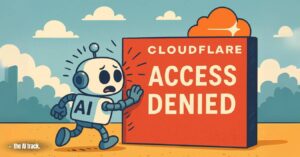
Cloudflare introduces AI crawler restrictions and a pay-per-crawl model, enabling content creators to control and monetize data access. Major publishers support the move.

AlphaGenome, DeepMind’s latest AI, simulates how mutations impact gene regulation, enabling breakthrough research in genomics, cancer, and synthetic biology.