

OpenAI Launches New Reasoning Models o3 and o4-mini with Image Understanding
OpenAI released o3 and o4-mini, its most advanced reasoning models yet. They feature full ChatGPT tool access and can process visual inputs alongside text.
OpenAI released o3 and o4-mini, its most advanced reasoning models yet. They feature full ChatGPT tool access and can process visual inputs alongside text.

xAI’s Grok evolves with memory recall, a real-time editing workspace, and file access from Google Drive. New features bring Grok into enterprise AI territory.
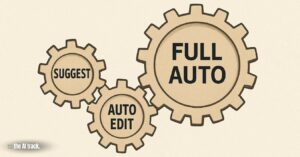
Codex CLI is OpenAI’s open-source terminal tool for AI-driven coding. It enables local execution, autonomy control, multimodal input, and model selection.

OpenAI launched GPT-4.1, mini, and nano with 1M-token input limits and strong coding capabilities. These models rival Google’s Gemini and Anthropic’s Claude.

OpenAI has enhanced ChatGPT with a persistent memory feature, allowing the AI to remember and utilize information from previous user conversations to provide more personalized and context-aware responses.

DeepSeek, in partnership with Tsinghua University, unveils DeepSeek-GRM, an AI framework that improves reasoning through self-principled critique tuning and generative reward modeling, aiming for more efficient and intelligent AI systems.

Meta launches open-weight Llama 4 Scout, Maverick, Behemoth, and Reasoning AI models, boosts multimodal AI capabilities, expands with $65 billion investment, and addresses benchmark scrutiny.
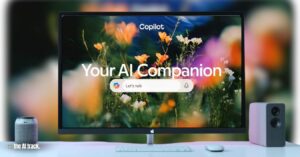
Microsoft enhances Copilot with memory, personalization, web-based actions, and real-time visual understanding—marking a leap toward deeply personal AI.

Alibaba introduced Qwen2.5-Omni-7B, a multimodal AI capable of processing text, images, audio, and video efficiently on smartphones and laptops, outperforming Google’s Gemini model in benchmarks.