
Key Takeaway
The GPT 5.6 launch has begun as a limited preview while U.S. officials review the cyber capabilities of OpenAI’s new model family. The rollout shows how frontier AI releases are becoming both product launches and policy events.

GPT 5.6 launch – Key Points
The Story
OpenAI is rolling out GPT-5.6, its newest model family, in three versions: Sol, Terra, and Luna.
- Sol is the most capable version and is focused on advanced reasoning, coding, biology, cybersecurity, and long-horizon agentic tasks.
- Terra is positioned as a balanced model for everyday work and high-volume use, with competitive performance to GPT-5.5 while being 2x cheaper.
- Luna is designed for speed and affordability and is the lowest-cost model in the GPT-5.6 family.
The release is not a normal broad rollout. GPT-5.6 is initially available only to a limited group of trusted partners and organizations through the API and Codex.
Broader access is planned in the coming weeks across ChatGPT, Codex, and the API. However, the timing of the GPT 5.6 launch now depends partly on additional testing and coordination with U.S. officials.
The Facts
- GPT-5.6 is being released in three model tiers: Sol, Terra, and Luna.
- GPT-5.6 introduces a new “max” reasoning setting for deeper reasoning.
- GPT-5.6 also introduces an “ultra” mode that uses sub-agents to work on more complex tasks.
- GPT-5.6 Sol sets a new state of the art on Terminal-Bench 2.1, a benchmark for command-line workflows that require planning, iteration, and tool coordination.
- GPT-5.6 Sol improves on GPT-5.5 in GeneBench v1, which tests long-horizon genomics and quantitative-biology workflows, while using fewer tokens.
- On ExploitBench, GPT-5.6 Sol is competitive with Mythos Preview while using about one-third of the output tokens.
- GPT-5.6 Sol, Terra, and Luna show stronger cyber capabilities on ExploitGym as reasoning increases.
- GPT-5.6 is initially available through the API and Codex to selected trusted partners.
- Wider availability for ChatGPT, Codex, and the API is planned soon.
- API pricing is set at $5 input and $30 output per 1 million tokens for Sol, $2.50 input and $15 output for Terra, and $1 input and $6 output for Luna.
- Sol is priced below Anthropic’s Fable pricing before access was suspended, which Engadget listed at $10 input and $50 output per 1 million tokens.
- GPT-5.6 supports more predictable prompt caching, including explicit cache breakpoints and a 30-minute minimum cache life.
- Cache writes for GPT-5.6 and later models are billed at 1.25x the model’s uncached input rate, while cache reads continue to receive a 90% cached-input discount.
- GPT-5.6 Sol is expected to launch on Cerebras in July at up to 750 tokens per second, with access initially limited to select customers.
What Is New
GPT-5.6 is not just a single model upgrade. It introduces a clearer tiered structure for different use cases.
Sol is the model for demanding work. It is aimed at users and organizations that need stronger reasoning, advanced coding help, scientific analysis, cybersecurity work, and longer multi-step tasks.
Terra is the middle option. It is intended for users who need strong performance but do not need the full cost or capability of Sol.
Luna is the lower-cost version. It is likely to matter most for high-volume applications, fast responses, and everyday AI tasks where cost matters more than maximum capability.
The new naming system also changes how the model family is organized. The number identifies the model generation, while Sol, Terra, and Luna identify durable capability tiers that can advance on their own schedule.
The new “max” and “ultra” modes point to a shift in how frontier AI systems are being used. Instead of only answering prompts, these systems are being designed to coordinate longer workflows, divide tasks, and operate more like agentic work systems.
Why Access Is Limited
The limited rollout is tied to the U.S. government’s growing concern over advanced AI systems with strong cybersecurity capabilities.
On June 2, 2026, the White House issued an executive order directing federal agencies to develop a classified benchmarking process for advanced AI cyber capabilities. The order also calls for a voluntary framework where AI developers can provide the government with access to certain frontier models before wider release.
The order asks companies to present their most powerful models for voluntary government review 30 days before public release. It says this framework is not meant to create a mandatory licensing or preclearance system for AI models. Still, the GPT 5.6 launch shows that government review is now becoming a practical factor in how frontier models reach users.
The current process is being framed as temporary rather than a long-term default. The central tension is clear: advanced models may be useful for developers, enterprises, cyber defenders, and global partners, but governments also want early visibility into frontier systems before they reach broad access.
The New York Times has reported that OpenAI, Anthropic, Google, xAI, and Microsoft had already been giving the U.S. government early access to their latest models before the order was signed, while Meta was the only reported holdout.
Cybersecurity Is the Main Concern
Cybersecurity is the central issue around GPT-5.6.
GPT-5.6 Sol is designed to be stronger at helping users find and fix vulnerabilities than at reliably carrying out end-to-end cyberattacks. It does not reach the “Cyber Critical” threshold under OpenAI’s Preparedness Framework.
In evaluations involving Chromium and Firefox, GPT-5.6 Sol identified bugs and exploitation primitives, but did not autonomously produce a functional full-chain exploit under the tested conditions.
At the same time, OpenAI’s system card classifies GPT-5.6 Sol, Terra, and Luna as “High” capability in cybersecurity. That means the models are powerful enough to require stronger safeguards and controlled rollout, even if they remain below the most serious risk threshold.
OpenAI used more than 700,000 A100-equivalent GPU hours for automated red-teaming focused on universal jailbreaks. It also worked with third-party testers and plans to continue human expert red-teaming during the preview period.
The Safeguards
GPT-5.6 uses layered safeguards, with configurations matched to each model’s capabilities.
The system is trained to refuse prohibited cyber assistance, including attempts to disguise intent or jailbreak the model. Real-time cyber and biology misuse classifiers can also evaluate output while it is being generated.
For higher-risk cases, generation may pause while a larger reasoning model reviews the conversation and its context. If the output is judged disallowed, it can be withheld before reaching the user.
Flagged activity can trigger account-level review across relevant conversations and risk signals. This is designed to distinguish persistent malicious behavior from legitimate dual-use security work, where similar technical concepts may appear in different contexts.
Longer-term enterprise controls are also part of the roadmap, including privacy-preserving detection, customer-operated safety controls, and access calibrated to the risk of a customer, user, or workload.
The Bigger AI Industry Shift
The GPT 5.6 launch is part of a broader change in the AI market.
Advanced AI models are no longer being treated only as software products. Governments are increasingly viewing them as strategic technologies with possible national security implications.
Anthropic has faced similar pressure over its Fable 5 and Mythos 5 models. Those restrictions showed that frontier AI rollouts can now be shaped by government review, export-control concerns, and cybersecurity safeguards. Anthropic has started lifting part of its access block after receiving U.S. government permission to redeploy Mythos to a select group of organizations.
This creates a new release pattern for frontier AI: companies may announce powerful models before those models are broadly available, while governments, selected partners, and safety testers review the most sensitive capabilities first.
What to Watch Next
The key question is whether GPT-5.6 becomes broadly available within the coming weeks.
The next issue is whether the U.S. government’s frontier-model framework remains voluntary in practice or becomes a stronger gatekeeping process for the most advanced AI systems.
The August deadline from the executive order also matters. By then, federal agencies are expected to establish a classified process for assessing advanced AI cyber capabilities and determining which systems qualify as covered frontier models.
Why This Matters
GPT-5.6 matters because it combines three important AI trends in one release: stronger model capability, more agentic workflows, and tighter government attention. For end users, this may mean better tools for coding, research, security, and productivity, but also slower access to the most advanced systems. For businesses, it shows that AI adoption planning now has to account for safety controls, regulatory review, pricing, caching, and availability, not just benchmark performance.
This article was drafted with the assistance of generative AI. All facts and details were reviewed and confirmed by an editor prior to publication.
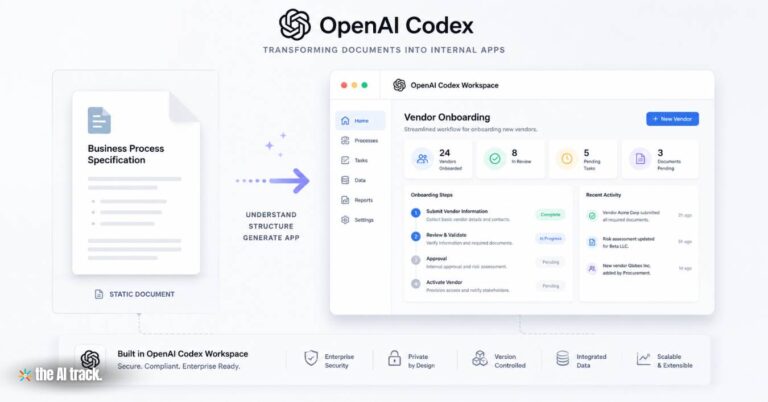
OpenAI Codex expands with Sites, Annotations, and plugins for enterprise workflows, moving beyond coding into broader business work.
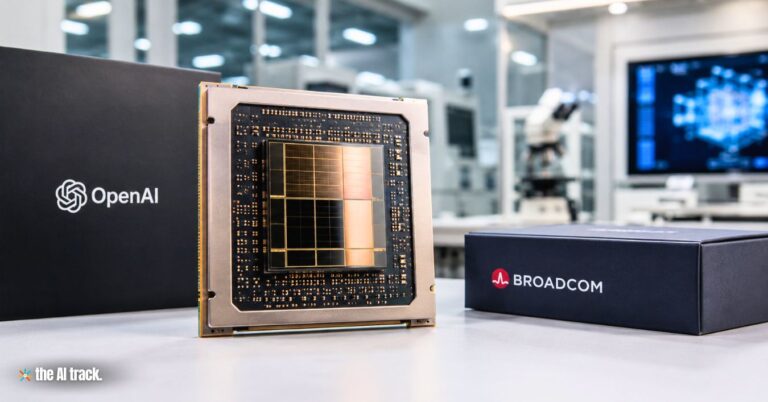
OpenAI and Broadcom unveiled Jalapeño, a custom inference chip for LLM workloads, as AI data center energy scrutiny grows.

ChatGPT health intelligence improves with GPT-5.5 Instant, bringing stronger benchmarks and fewer flagged factuality issues for free users.

Getty Images signed a multi-year OpenAI deal to display licensed visuals inside ChatGPT search as AI platforms move toward licensed media.
Read a comprehensive monthly roundup of the latest AI news!