Key Takeaway
The SpaceX IPO gives public markets their first major test of investor appetite for frontier technology companies built around extreme capital needs, infrastructure scale, founder control, and long-term growth stories. OpenAI and Anthropic now face a clearer benchmark as they prepare for possible public listings.
SpaceX IPO – Key Points
The Core Shift
The SpaceX IPO is not only a space-industry milestone. It is also a signal for the next phase of the AI market.
For years, OpenAI and Anthropic have raised money in private markets, where valuation depends on strategic investors, cloud partners, venture funds, and long-term expectations. A public listing changes the test. It forces a company to explain its economics, infrastructure spending, revenue concentration, governance, risks, and growth assumptions to a much wider investor base.
SpaceX has now shown that public markets can absorb a very large technology offering when the company has a powerful story, dominant brand recognition, founder-led control, and a credible infrastructure platform. That matters because frontier AI companies also require massive capital and depend on long-term belief in future demand.
The Facts
- SpaceX priced its IPO at $135 per share.
- The company sold 555.56 million shares.
- The SpaceX IPO raised about $75 billion.
- The IPO valued SpaceX at roughly $1.77 trillion.
- SpaceX is expected to trade on Nasdaq under the ticker symbol “SPCX.”
- The listing would make SpaceX the seventh most valuable U.S.-listed company, ahead of Tesla.
- Elon Musk will retain more than 82% of SpaceX’s voting power after the IPO.
- SpaceX set aside 30% of shares for retail buyers, an unusually large allocation.
- The company is selling only about 5% of its total available shares at first.
- The offering broke the previous IPO fundraising record set by Saudi Aramco in 2019.
- SpaceX reported first-quarter revenue of $4.69 billion, up from $4.07 billion a year earlier.
- Full-year revenue rose 33% to $18.67 billion last year.
- SpaceX recorded a $4.28 billion net loss in the latest quarter after losing $4.94 billion in 2025.
- The company reported first-quarter capital expenditure of $10.1 billion, including $7.7 billion for AI.
- SpaceX has a cumulative deficit of about $41.3 billion since its founding in 2002.
- Starlink currently accounts for most of SpaceX’s revenue and is its only profitable unit.
- Starlink connects millions of consumer, enterprise, and government customers across 164 countries, territories, and markets.
- SpaceX’s stated total market opportunity spans $28.5 trillion.
- Anthropic confidentially submitted a draft S-1 registration statement to the U.S. Securities and Exchange Commission on June 1, 2026.
- OpenAI has also submitted a confidential S-1, while keeping the timing of any public listing undecided.
- Goldman Sachs has forecast that U.S. IPO proceeds could quadruple to a record $160 billion in 2026, with a pipeline that includes SpaceX, OpenAI, and Anthropic.
- The key public-market question is now whether investors will treat frontier AI companies like software platforms, infrastructure companies, or speculative capital-intensive technology bets.
Why SpaceX Matters to the AI IPO Race
SpaceX and frontier AI companies are different businesses, but they share one important feature: both ask investors to fund very expensive infrastructure before all future revenue is fully proven.
For SpaceX, the infrastructure story includes rockets, Starlink satellites, launch systems, manufacturing, government contracts, AI compute, xAI, and long-term space ambitions. For OpenAI and Anthropic, the infrastructure story is compute, data centers, chips, model training, inference capacity, enterprise distribution, and safety systems.
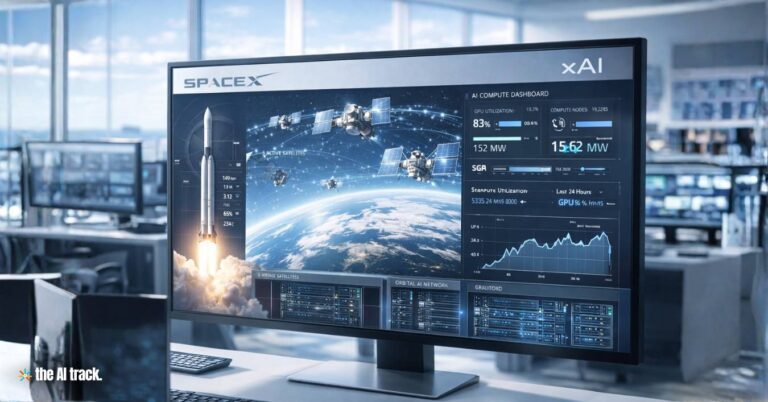
SpaceX’s long-term market case now includes AI infrastructure, models, and access to real-time data from X. The February merger of xAI with SpaceX makes AI a more explicit part of the company’s public-market story.
That makes the SpaceX IPO more relevant to the AI market than a traditional aerospace listing. The lesson for OpenAI and Anthropic is direct: public investors may accept huge spending, but only if the companies can explain how that spending becomes durable revenue.
What OpenAI and Anthropic Must Prove
OpenAI and Anthropic already have strong brand recognition, rapid product adoption, and major enterprise interest. That will not be enough on its own.
Public investors will likely focus on six questions:
Revenue quality
Investors will want to know how much revenue is recurring, how much comes from enterprise customers, and how much depends on consumer subscriptions.
Compute costs
Frontier AI is expensive to train and expensive to serve. SpaceX’s filing shows how closely investors may examine AI capital expenditure, especially when infrastructure costs rise faster than profits.
Customer concentration
Large AI companies often depend on a small number of major partners, cloud providers, and enterprise contracts. Public markets will examine that dependency closely.
Product durability
AI tools are improving quickly across the market. Investors will ask whether customers stay loyal or switch when another model becomes cheaper, faster, or more capable.
Governance and control
The SpaceX IPO preserves strong founder control, with Musk retaining more than 82% of voting power. OpenAI and Anthropic will face their own governance questions, especially because frontier AI companies operate with unusual safety, partnership, and public-interest pressures.
Regulatory and safety risk
OpenAI and Anthropic operate in a sector facing scrutiny over copyright, safety, national security, labor impact, and consumer protection. These risks become more visible after a public filing.
The Capital Problem Behind Frontier AI
The biggest AI companies are no longer only software companies. They increasingly look like infrastructure companies.
Training and serving advanced models requires large-scale compute, power access, chip supply, cloud capacity, engineering teams, and safety testing. That creates a financing challenge. Private capital can support early growth, but the largest AI labs may eventually need public markets to fund their next stage.
SpaceX illustrates the scale of that challenge. Its first-quarter capital expenditure more than doubled from a year earlier, with most of that spending tied to AI. At the same time, the company warned investors that it may not achieve profitability in the future.
For OpenAI and Anthropic, the public-market story must connect technical progress to financial discipline. Better models alone will not answer questions about margins, pricing, infrastructure costs, governance, and long-term profitability.
The Market Impact
The SpaceX IPO may strengthen confidence in large technology listings. It also raises the bar.
If SpaceX trades well, investors may become more open to other mega-scale technology IPOs. That could help OpenAI and Anthropic. However, it could also make comparisons sharper. Public investors will be able to ask why one company deserves a premium over another.
SpaceX also shows the pressure point. The company reached a massive valuation even though it is smaller by revenue than other trillion-dollar peers, lost money last year, and still faces competition from rivals such as Blue Origin in launch services, space commercialization, and government contracts.
The early analyst targets show the range of expectations. Oppenheimer set a $190 price target, while New Street Research set a $165 target and valued xAI at $575 billion relative to expectations for OpenAI and Anthropic.
For AI companies, the comparison will not only be about revenue growth. It will be about whether AI demand can justify the cost of building and running frontier models.
The next major AI IPOs may therefore become a referendum on the economics of generative AI itself.
What to Watch Next
The next important signals are:
- how SpaceX trades after its Nasdaq debut;
- whether retail demand supports the valuation beyond the first trading day;
- whether SpaceX can justify a valuation above larger revenue peers;
- when OpenAI and Anthropic make their S-1 filings public;
- whether either AI company gives a clear IPO timeline;
- how much revenue comes from subscriptions, APIs, and enterprise contracts;
- whether compute costs are falling as usage rises;
- how public filings describe copyright, safety, governance, and regulatory risks;
- whether investors value AI labs as software companies or infrastructure-heavy platforms.
Why This Matters
The SpaceX IPO gives the AI industry a new public-market benchmark. OpenAI and Anthropic now need to prove that frontier AI can become not only powerful and widely used, but also financially understandable, scalable, and resilient under public investor scrutiny.
This article was drafted with the assistance of generative AI. All facts and details were reviewed and confirmed by an editor prior to publication.
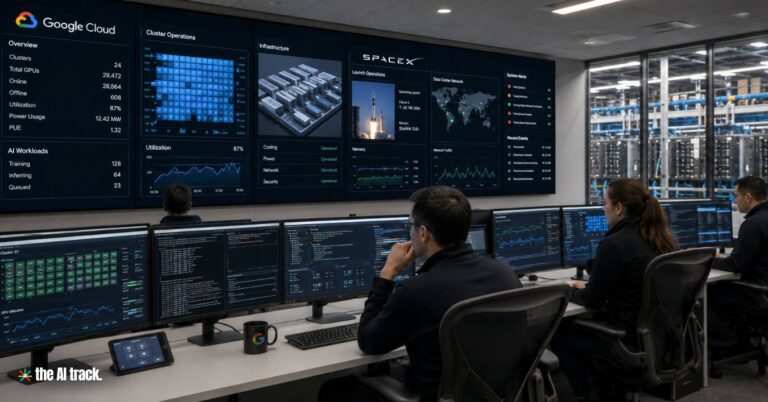
The Google SpaceX compute deal gives Google access to 110,000 Nvidia GPUs from October 2026 to June 2029 as AI demand rises.
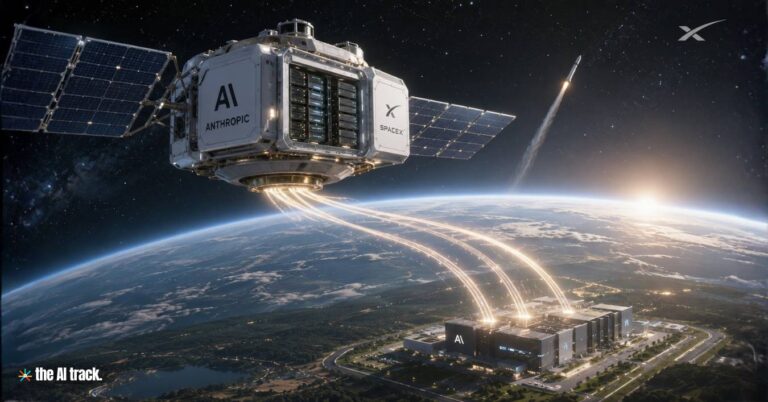
SpaceX will give Anthropic access to Colossus 1, a Memphis AI supercomputer with 220,000+ NVIDIA GPUs, boosting Claude capacity.
SpaceX acquires xAI in February 2026, with valuations reported around $1.125tn to $1.25tn, creating the world’s most valuable private company.

Humain invests $3 billion in xAI Series E, part of a $20 billion round closed in January 2026, ahead of SpaceX acquisition and share conversion.
Read a comprehensive monthly roundup of the latest AI news!