Key Takeaway
OpenAI released GPT Image 1.5, an image model that runs up to 4× faster, follows instructions more reliably, and supports consistent multi-step edits inside a redesigned Images workflow, an aggressive response to Google’s surging Gemini ecosystem and a push toward practical, enterprise-ready image creation.
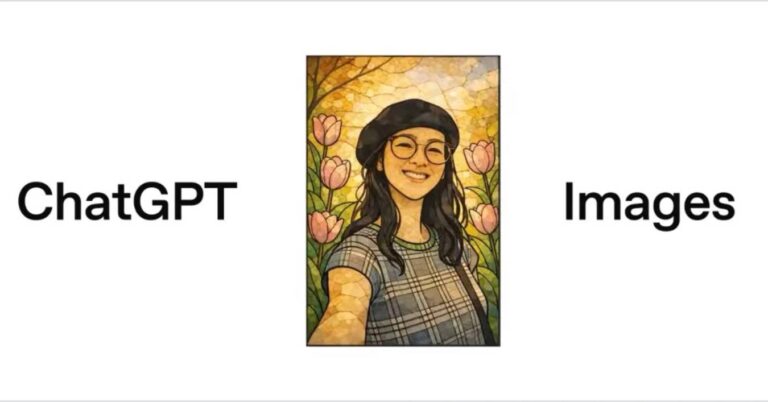
OpenAI Launches GPT Image 1.5 – Key Points
Major performance upgrade announced Tuesday
GPT Image 1.5 generates images up to 4× faster than its predecessor, with better instruction-following and more precise edits. A core improvement is consistency across consecutive edits: changes to lighting, facial expression, color tone, or composition are less likely to trigger unwanted shifts. OpenAI says it preserves small details so edits change only what was requested. Early hands-on testing still found occasional subtle alterations (expression, camera angle, small object removals), but generally without “uncanny valley” distortions.
Stronger intent matching and high-fidelity edits
OpenAI says the model better “matches user intent,” especially for photo editing. It supports believable clothing and hairstyle try-ons, plus stylistic filters and conceptual transformations that keep the “essence” of the original. OpenAI emphasizes preserving lighting, composition, and people’s appearance across repeated edits. Practical testing suggests recontextualization and compositing are materially improved, though inserted elements can vary in scale and realism.
Broader edit toolkit for real photo workflows
OpenAI highlights editing operations including adding, subtracting, combining, blending, and transposing. In practice, GPT Image 1.5 can handle multi-step sequences such as: changing apparel while keeping typography style consistent; placing a subject into a new location; iterating with added characters, weather, and time-of-day; and converting the result into a designed graphic with readable text.
More ways to create without writing long prompts
A dedicated Images home offers dozens of preset styles, filters, and ideas, plus trending prompts. OpenAI says some transformations can be tried without any written prompt, speeding up exploration for casual users and giving professionals faster starting points.
Explicit response to competitive pressure from Google
In an internal memo last month, CEO Sam Altman described a “code red” moment after Google launched Gemini 3 and the viral Nano Banana Pro image tool. Google reported 650 million monthly Gemini users by October. Nano Banana is widely used as a nickname for Google’s Gemini image editor (often described as Gemini 2.5 Flash Image) and has been integrated into Gemini, Google Photos, Search, and Messages.
ChatGPT Images redesigned as a creative workspace
ChatGPT now includes a dedicated Images tab with filters, trends, and inspiration tools. Fidji Simo, CEO of Applications, says it works “more like a creative studio,” reflecting that visual creation needs a different workflow than text chat. OpenAI frames it as a “creative studio in your pocket”: practical edits plus expressive reimaginings.
Shift from novelty to practical image generation
OpenAI positions GPT Image 1.5 as “practical, high-fidelity” creation for product images, marketing visuals, work graphics, and everyday photo edits. It highlights stronger preservation of branded logos and key visuals across edits—useful for marketing and e-commerce teams generating catalog variants from a single source image. Community stress-tests (including viral replication trends) have made repeat-edit consistency a visible benchmark.
Improved text rendering inside images
GPT Image 1.5 improves text rendering, including denser, smaller text—critical for posters, packaging, ads, UI concepts, and product imagery. Hands-on tests reported surprisingly accurate typography recreation (for example, “Keep Calm”-style design) and longer formatted text in layouts like invitation graphics.
More natural outputs, including complex scenes
OpenAI reports more natural-looking results and better rendering of many small faces, which matters for crowds and group scenes. Some composites can still look “a little fake,” but lighting and shadows can align plausibly with new contexts.
Accelerated product timeline tied to competition
GPT Image 1.5 was planned for January 2026 but shipped earlier, following the December 13 release of GPT-5.2, also accelerated under competitive pressure and LMArena visibility. GPT Image 1.5 was reported to reach #1 on LMArena’s Text-to-Image leaderboard soon after launch, pushing Nano Banana Pro to #2, though early comparisons vary by task and evaluator.
Strategic partnerships expand future use cases
OpenAI confirmed a $1 billion partnership with The Walt Disney Company. Starting in early 2026, users will be able to generate images and videos featuring 200+ Disney, Marvel, Pixar, and Star Wars characters.
Enterprise positioning and investor pressure
OpenAI is positioning GPT Image 1.5 as enterprise-relevant amid pressure to turn a profit, pointing to adoption across creative tools, e-commerce, and marketing software. Reliable edits and brand consistency are central to that pitch.
Lower cost for API usage
OpenAI says image inputs and outputs are 20% cheaper in GPT Image 1.5 than GPT Image 1, improving feasibility for high-volume iteration via the API.
Availability and distribution
GPT Image 1.5 is available worldwide in ChatGPT and via the API, working across ChatGPT experiences without manual model selection. OpenAI notes access on chatgpt.com and mobile. The earlier ChatGPT Images experience remains available as a custom GPT. Rollout can vary by client (web before some desktop apps). The model is available in all tiers, including free, with strict limits for non-paying users.
Competitive landscape tightening across creative tools
Google’s Nano Banana Pro is integrated into Adobe Firefly, tightening the race between model providers and traditional creative software. OpenAI still leads in scale (800 million weekly active ChatGPT users) versus Gemini’s 650 million monthly users, but Google’s momentum has narrowed the gap. Side-by-side photo edits can look similar, with quality judgments varying by prompt.
Performance is improved, but still imperfect
OpenAI says rerunning earlier examples shows clear gains, while acknowledging limitations. Remaining friction includes occasional failure to enforce constraints (like 16:9), session carry-over issues unless users restart from the original upload, and UI generation effects some users find distracting.
Why This Matters
GPT Image 1.5 shows how fast the OpenAI–Google rivalry is compressing product cycles. Faster generation, consistent multi-step edits, and improved text handling push AI closer to replacing parts of professional creative workflows. The 20% cheaper image I/O improves the economics of production use, while public benchmarks like LMArena increasingly shape perception even as real-world results vary across tasks. Overall, image generation is shifting from novelty to a practical work tool.
This article was drafted with the assistance of generative AI. All facts and details were reviewed and confirmed by an editor prior to publication.
Explore 50+ viral ChatGPT 4o image prompts—from memes to comic strips to pet makeovers. Try them now and unleash your visual creativity.
Google released Nano Banana Pro, the Gemini 3 Pro Image model from Google DeepMind, delivering high-fidelity visuals, multilingual on-image text, and SynthID-backed AI image verification across the Gemini app, Search, Workspace, Ads, and developer tools.
See which AI image generator is the best in this epic showdown among the top 12 and discover which one can create the most realistic, creative, or surreal images
Read a comprehensive monthly roundup of the latest AI news!