Key Takeaway
OpenAI, Sam Altman, Greg Brockman, and Microsoft avoided liability in the Elon Musk lawsuit after a unanimous federal jury found Musk waited too long to bring his claims. The ruling clears a major legal obstacle for OpenAI, though Musk says he plans to appeal and the broader fight is likely to continue around investor scrutiny and potential IPOs.
OpenAI Wins Elon Musk Lawsuit – Key Points
The Story
A federal jury in Oakland, California, sided with OpenAI and its leadership in the Elon Musk lawsuit over the company’s shift from its original nonprofit structure toward a more commercial AI business. The nine-person jury reached its verdict after a three-week trial and about two hours of deliberation. Judge Yvonne Gonzalez Rogers accepted the advisory verdict and dismissed Musk’s claims. The court did not rule on whether Musk’s broader accusations about OpenAI’s nonprofit mission were true.
The Facts
The jury found OpenAI and its executives not liable.
Sam Altman, Greg Brockman, OpenAI, and Microsoft were cleared of Musk’s claims, including unjust enrichment and allegations tied to OpenAI’s founding agreement.
The verdict was unanimous.
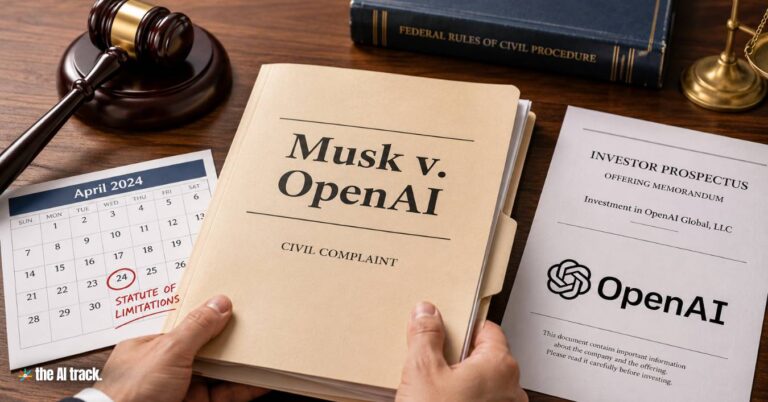
Jurors agreed that Musk had waited too long to sue, leaving his claims effectively expired under the statute of limitations.
The core legal issue was timing, not the merits.
The jury found that Musk’s breach of charitable trust and unjust enrichment claims fell outside the three-year statute of limitations, so it was not required to decide whether the underlying accusations were true.
The verdict was advisory, but the judge adopted it.
The jury served in an advisory role, but Judge Yvonne Gonzalez Rogers accepted the verdict as the court’s ruling and dismissed the claims.
The Elon Musk lawsuit centered on OpenAI’s original mission.
Musk claimed OpenAI moved away from its founding nonprofit purpose of developing AI for humanity’s benefit and instead pursued commercial gain through its for-profit structure and Microsoft partnership.
Musk said he donated $38 million early in OpenAI’s history.
His case argued that Altman accepted that support while later breaking the nonprofit mission Musk believed he had backed.
Musk sought major financial and governance remedies.
His lawsuit sought $134 billion to be redistributed from OpenAI’s for-profit arm to its nonprofit, along with the removal of Altman and Brockman and the reversal of OpenAI’s for-profit restructuring.
OpenAI rejected Musk’s allegations.
OpenAI argued that Musk was aware of its commercial plans, had supported the idea of a for-profit structure, had previously tried to gain control of the company, and brought the case after launching his own AI company, xAI.
Microsoft was also cleared.
Musk accused Microsoft of aiding OpenAI’s allegedly improper transition toward a more for-profit company. Microsoft was found not liable, and other claims against it were dismissed as a matter of law after the jury’s findings on the OpenAI claims.
The trial exposed OpenAI’s internal history.
The case included testimony from Musk, Altman, Brockman, Microsoft CEO Satya Nadella, and other tech industry figures, offering a public view into OpenAI’s founding tensions and governance disputes.
The case now shifts toward appeal and investor scrutiny.
Musk says he will appeal to the Ninth Circuit, calling the ruling a “calendar technicality.” The legal fight now overlaps with possible public-market plans: OpenAI has been valued above $850 billion and is reportedly preparing for a potential listing at more than $1 trillion, while SpaceX, after its xAI deal, is also moving toward a potentially record-setting IPO.
Why This Matters
The ruling reduces legal uncertainty around OpenAI’s corporate structure at a critical moment for the AI industry. But the Elon Musk lawsuit does not settle the larger governance question behind major AI platforms: who controls frontier AI systems, who benefits financially, and how companies balance public-interest missions with commercial scale. That question now moves from the courtroom toward appeals, investors, potential IPOs, and the broader competition between OpenAI, xAI, Anthropic, Google, and Microsoft.
This article was drafted with the assistance of generative AI. All facts and details were reviewed and confirmed by an editor prior to publication.
Elon Musk testified as the OpenAI trial began over charitable trust claims, Microsoft ties and the company’s commercial structure.

OpenAI countersues Elon Musk, alleging efforts to undermine the company through legal actions and a rejected $97.4B takeover bid.
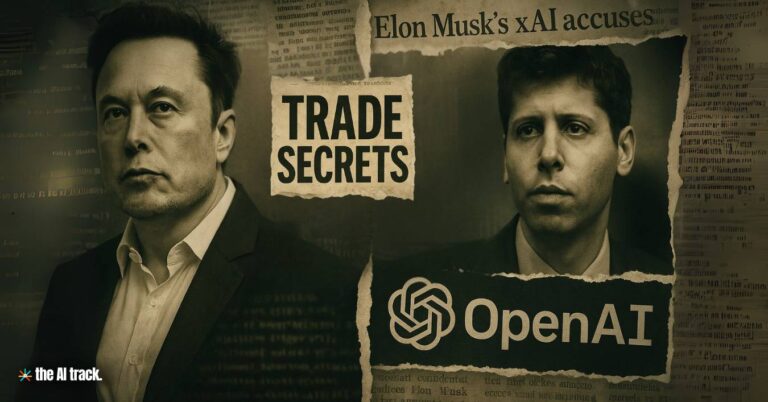
Elon Musk’s xAI accuses OpenAI of stealing trade secrets through employee poaching and code transfers. OpenAI denies claims, calling it harassment.
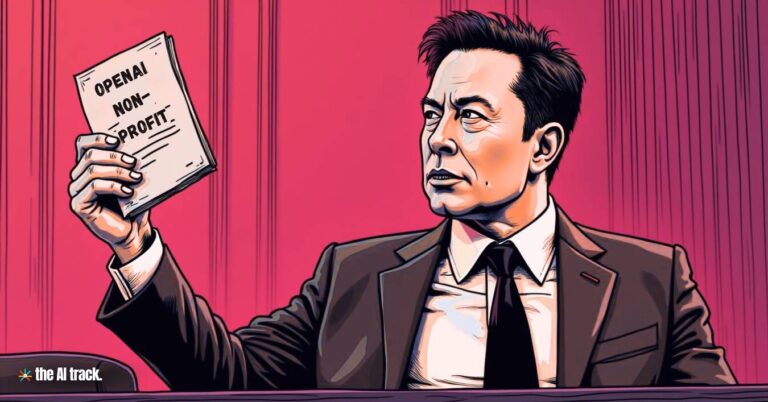
Elon Musk vs OpenAI in legal battle to prevent OpenAI’s transition to a for-profit entity, alleging anticompetitive practices and deviation from its founding principles.
Read a comprehensive monthly roundup of the latest AI news!