Key Takeaway
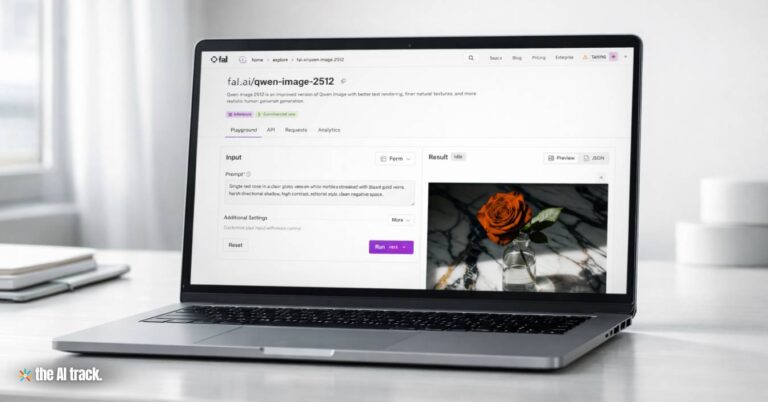
Alibaba has released Qwen-Image-2512, an open-source image generation model built for text-heavy, enterprise visuals, offering organizations a credible alternative to Google and OpenAI image systems without platform lock-in or unpredictable usage costs.
Qwen-Image-2512 Launches – Key Points
Why this launch matters now (Nov–Dec 2025)
In November, Google introduced Nano Banana Pro (Gemini 3 Pro Image), demonstrating reliable generation of text-heavy infographics, slides, diagrams, and multilingual visuals with minimal spelling errors. While widely praised, the model reinforced familiar tradeoffs: deep dependence on Google Cloud, premium usage-based pricing, and limited flexibility for enterprises needing predictable costs, regional deployment control, or strict data governance.
Alibaba’s open-source response (Dec 2025)
Alibaba’s Qwen AI research team released Qwen-Image-2512 in December under the Apache 2.0 license, allowing free commercial use, modification, fine-tuning, and self-hosted deployment. The model is available via Qwen Chat, with full weights on Hugging Face and ModelScope, source access on GitHub, and browser-based demos for immediate evaluation.
What actually improved in the December 2512 update
The update targets three enterprise-critical gaps that historically limited open image models:
- Human realism and scene coherence – more accurate facial age, texture, posture, and contextual environments, improving credibility for training and internal communications.
- Natural texture fidelity – finer rendering of materials, water, landscapes, and animal fur, reducing post-production effort for ecommerce and education.
- Structured text and layout rendering – significantly improved embedded text accuracy and layout consistency in Chinese and English, enabling dependable slides, posters, menus, and infographics.
Benchmarks indicate production readiness
In blind, human-evaluated testing on Alibaba’s AI Arena, Qwen-Image-2512 ranked as the strongest open-source image model and remained competitive with leading closed systems, supporting its positioning as a deployable production tool rather than a research prototype.
Why licensing changes the equation
Apache 2.0 licensing enables enterprises to control costs by self-hosting, meet data residency and audit requirements, and localize or customize models for regional markets and internal brand standards—capabilities typically constrained in proprietary image APIs.
API access for managed deployments
For teams preferring managed inference, Qwen-Image-2512 is offered via Alibaba Cloud Model Studio as
qwen-image-max, priced at $0.075 per generated image, with production-ready rate limits and limited free quotas. This hybrid model reflects common enterprise deployment patterns: in-house customization paired with optional managed services.How Qwen differs strategically from Google
Google’s image models integrate tightly with Vertex AI, Workspace, Ads, and the broader Gemini ecosystem, favoring organizations already standardized on Google Cloud. Qwen follows a modular, tool-agnostic approach, appealing to enterprises building independent AI stacks or integrating image generation into custom workflows and internal data systems.
Why This Matters
Qwen-Image-2512 highlights a broader shift in enterprise AI: open-source image models are no longer lagging proprietary systems on the features that matter most: text accuracy, layout control, and visual realism. By pairing competitive performance with openness, predictable costs, and deployment sovereignty, Alibaba expands enterprise choice beyond tightly coupled cloud platforms at a moment when control and governance are becoming strategic priorities.
This article was drafted with the assistance of generative AI. All facts and details were reviewed and confirmed by an editor prior to publication.
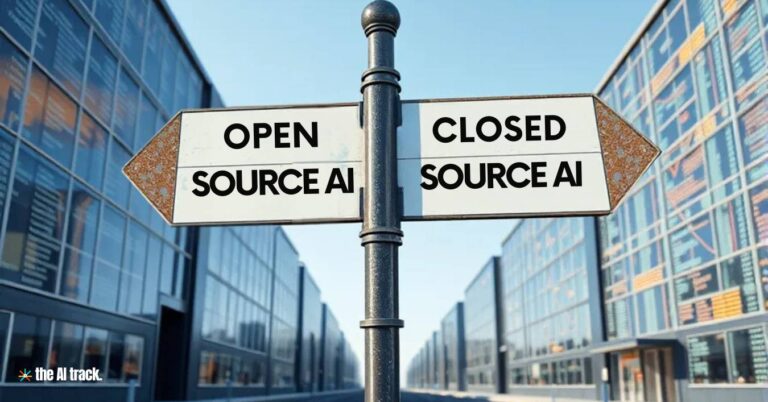
The AI landscape is increasingly defined by the contrasting approaches of open source and closed source models. This article examines the nuances of each approach, exploring their benefits, challenges, and implications for businesses, developers, and the future of AI.
Alibaba launches Qwen3-Max with trillion-parameter scale and adds open-source Qwen3-Omni, a real-time multimodal model with competitive benchmarks and clear API pricing.

Alibaba and Nvidia integrate Physical AI into Cloud PAI, expand data centers worldwide, and grow AI spending despite China’s chip restrictions.
Read a comprehensive monthly roundup of the latest AI news!