Key Takeaway
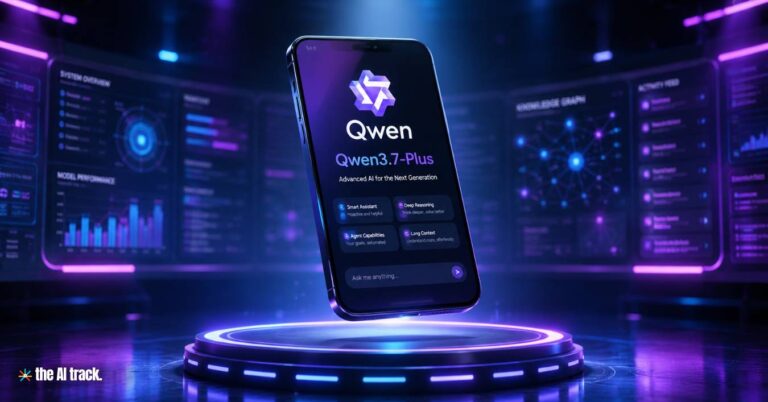
Alibaba has launched Qwen3.7-Plus, a multimodal AI model for image, video, text, coding, and tool-use workflows. The model is available through Alibaba Cloud Model Studio and positions Qwen more directly in the race for agentic AI systems that can reason, act, verify, and iterate.
Alibaba Launches Qwen3.7-Plus – Key Points
What Is New
Qwen3.7-Plus is the multimodal model in Alibaba’s Qwen3.7 family. Unlike Qwen3.7-Max, which focuses on text and long-horizon agent tasks, Qwen3.7-Plus adds native image and video understanding.
That distinction matters. Qwen3.7-Plus can analyze visual inputs, but it is not an image or video generator. Alibaba’s image and video generation models remain separate from this release.
Alibaba announced Qwen3.7-Plus on June 2, 2026. Alibaba Cloud Model Studio lists it as a native multimodal model with a 1 million-token context window and agentic coding capabilities.
Key Points
Access and Pricing
- Qwen3.7-Plus is available through Alibaba Cloud Model Studio, the international-facing platform for accessing Alibaba’s model APIs.
- Model Studio lists the model under the Qwen3.7 series.
- Pricing is listed at $0.40–$1.20 per 1 million input tokens.
- Output pricing is listed at $1.60–$4.80 per 1 million tokens.
- The model is positioned as the cost-effective option in the Qwen3.7 lineup.
Capabilities
- Qwen3.7-Plus supports text, image, and video inputs.
- The model is designed for visual understanding, document analysis, chart reading, OCR-style workflows, coding, and productivity automation.
- Its agentic abilities include deep reasoning, self-programming, tool invocation, verification and testing, and autonomous iteration.
- Tool invocation allows the model to call external APIs or functions.
- Verification and testing allow the model to check whether an output works before completing a task.
- Autonomous iteration means the model can loop through steps instead of producing a single static answer.
- The model is positioned for code execution, GUI-based workflows, and enterprise automation tasks.
- Qwen3.7-Plus is designed to work across agent frameworks, including Claude Code, OpenClaw, Qwen Code, and other development environments.
Benchmarks and Positioning
- Qwen3.7-Plus-Preview ranked #16 overall in Vision Arena.
- That ranking placed Alibaba as the #5 lab in vision, based on LM Arena’s blind user-voting format.
- The model remains behind the strongest US frontier labs in vision ranking, but it gives Alibaba a stronger position in multimodal AI.
How It Works
Qwen3.7-Plus is built for multimodal agent workflows. A standard chatbot answers a prompt. An agentic model can plan steps, use tools, run checks, and adjust its approach.
That makes the model more relevant for work where the input is not just text. A user could ask it to inspect a spreadsheet screenshot, interpret a chart, read frames from a video, analyze a product document, or support a coding workflow that requires external tools.
The key difference is that the model is designed to connect visual understanding with action planning. It can interpret complex visual inputs, reason from them, invoke tools, and execute follow-up tasks through code or GUI environments.
What You Can Use It For
Qwen3.7-Plus is most relevant for users and developers who need AI to process visual or mixed-format information.
Useful examples include:
- reading screenshots and extracting structured information
- analyzing charts, tables, or scanned documents
- reviewing video frames for visual details
- supporting coding agents that call tools and test outputs
- building API-based assistants for workplace automation
- combining long documents with images or video references
- creating productivity workflows that need verification before completion
- supporting long-running enterprise tasks that require continuity across multiple steps
Limitations
Qwen3.7-Plus should not be treated as an image or video generation model. Its visual role is understanding, not creation.
Its Vision Arena result is also a benchmark signal, not a complete product evaluation. A #16 ranking shows competitive visual understanding, but it does not prove reliability across every real-world use case. Developers still need to test the model on their own documents, images, workflows, and safety requirements.
Agentic workflows also introduce operational risk. A model that calls tools, edits files, or runs code needs clear permissions, logging, guardrails, and human review for sensitive tasks.
Why This Matters
Qwen3.7-Plus shows how quickly multimodal AI is becoming part of everyday software infrastructure. For end users and businesses, the important shift is not just better image understanding. It is the combination of vision, long context, tool use, workflow execution, and autonomous iteration inside one API-accessible model.
This article was drafted with the assistance of generative AI. All facts and details were reviewed and confirmed by an editor prior to publication.
Alibaba introduced Qwen3.7-Max, the Zhenwu M890 AI chip, and Panjiu AL128 server for agentic AI, coding, and domestic infrastructure.

Alibaba is preparing to connect Qwen with Taobao Shopping, giving users AI tools for browsing, comparison and after-sales support.
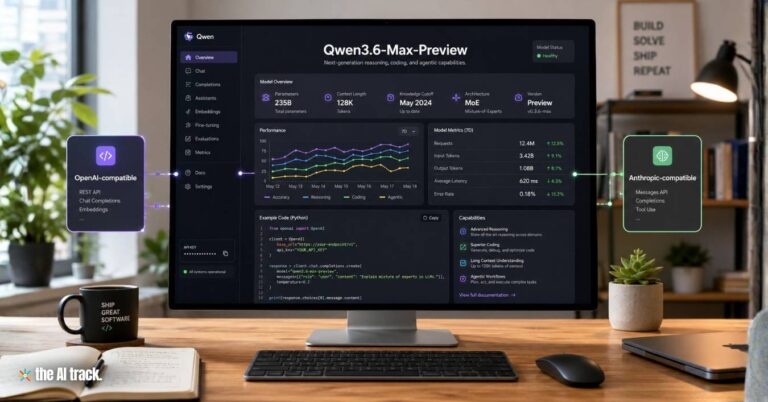
Alibaba released Qwen 3.6 Max Preview on April 20, 2026, with a 256k context window and reported coding and agent benchmark gains.

Alibaba and Nvidia integrate Physical AI into Cloud PAI, expand data centers worldwide, and grow AI spending despite China’s chip restrictions.
Read a comprehensive monthly roundup of the latest AI news!